Music · Memory · Story
Ray Heredia: el genio fugaz del nuevo flamenco
Originally published in CasaMacondo ↗
Camarón had always been with Rosalía, as if he had lived in her glove compartment: he was what she absorbed as a child, what came over the radio and perhaps over the record player at home. So when she stood on a stage in Seville at last November’s Latin Grammy ceremony, before an audience of purists steeped in cante jondo and the magic of duende, her voice did not falter as she sang Rocío Jurado’s Se nos rompió el amor in her own sweet way. Those who dream big cover the greats without embarrassment, I thought. They do it in their own style, breaking down walls and opening roads without worrying what anyone will say.
This return to the seed to imagine things anew is not new. It moves in a spiral from one generation to the next. Nor is it a sacred ritual in which one asks the gods of Olympus for permission to touch their treasures. It means approaching them, acknowledging the glory of their battles, understanding them and moving from praise to challenge. To reinvent what is sacred, we have to mix it with the present and give it a life today. Wars are not won by worshipping nostalgia, which, as Woody Allen would say, is denial. That is why geniuses are stubborn by nature and carry a melancholy rebellion in their souls, as if they had lived many lives trying to leave a mark. They must overcome their greatest reference in order to recreate it, take its place and wait for someone else to dethrone them in turn.
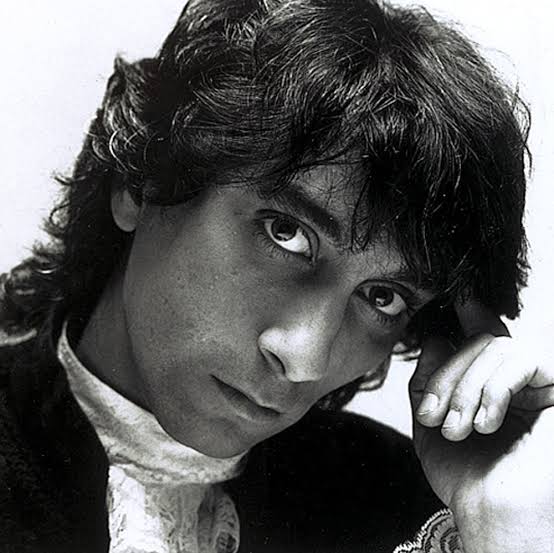
Flamenco has seen this at different moments. Diego el Cigala dared to sing boleros in a flamenco style with Bebo Valdés, in a project produced by Javier Limón and Fernando Trueba. Lole y Manuel proposed a new sound as Francoism neared its end. Camarón made La leyenda del tiempo, a jazz-inflected record that opened a door to a different Spain, one that nearly failed to understand him. And then came Ray Heredia: the misunderstood, fleeting genius who helped define the Jóvenes Flamencos movement championed by Mario Pacheco. Pacheco believed a label could support young artists following the path of a mixed and sometimes marginalised tradition. He called it Nuevos Medios; alongside Ray, its artists included Pata Negra, Ketama, Jorge Pardo, José el Francés and Barbería del Sur.
Ray led me to flamenco. Its sound, both certain and wandering like his Gitano roots, reached me when I was eleven, as I tuned a shortwave radio in our living room in Barranquilla. The encounter was unexpected. After a programme of French music on one station, I landed, with only the dial’s knob as a compass, on a Spanish broadcast I never found again at the same frequency. That invisible thread tied me to a sound that has stayed with me. Flamenco truly reflects life, in all its complexity, contradictions and beauty.
The presenter spoke of a group called Ketama, described its members and played a piece of the infectious Domo arigato. Then came a posthumous tribute to a young singer whose album they were about to introduce, a record released at the time of his death. Ray Heredia began to play. Without meaning to, and knowing almost nothing of the genre, I was hearing Quien no corre, vuela, the song through which the flamenco world mourned Ray. He died on July 17, 1991, at twenty-seven, after a heroin overdose in the shantytown of La Celsa in Madrid. The tragedy came as his first solo album, which shared the song’s title, was emerging.
The voice on the radio described Ray as a gifted multi-instrumentalist who brought new sounds into his recordings. It also spoke of how he would disappear for days amid his excesses and inner struggles. The announcer sounded torn between shock and indignation at losing such a promising talent so early. Ray knew his own gifts and was not afraid of them. His sister, the flamenco dancer Marta Heredia, remembered him anticipating the recognition that would come: “Ray always said, ‘I am the best. They won’t understand it now, but in a few years they will know why I say it.’” Years later, as my love of music and research deepened, I became absorbed in these two records: Ketama’s 1985 debut and Ray’s 1991 solo release.
In the beginning Ketama met to play in the corridors of the Los Canasteros tablao in Madrid. José Soto, Ray Heredia and Juan Carmona formed the trio; Juan’s brother Antonio joined them, and together they made their first album. They taught me how versatile flamenco could be. My encounter with Heredia was different: Ray calls for care because one does not simply listen to him; one enters his world. His music, like Camarón’s, is almost an initiation rite for anyone trying to understand flamenco’s pull. It can move through euphoria, madness, melancholy, the abyss and fantasy: a força estranha running through it all, as Caetano Veloso might say.
Ketama made two magnificent albums that drew praise from figures including David Byrne. Some spoke of them as the Beatles of flamenco. That momentum led them, after a visit to London, to make Songhai in 1988, a record that built a bridge between flamenco and Moroccan music with the Malian kora master Toumani Diabaté. Ray followed a path of experiments, fusions, missteps and discoveries that culminated in Quien no corre, vuela in 1991. In that album he set down his essence and opened a route others would later follow.
The record brought together sounds that were unusual in that context: jazz, pop, rock and even Caribbean bolero seen through flamenco eyes. Ray’s story holds both musical brilliance and a tragic ending. Alegría de vivir, the album’s most emblematic song, lends emotional depth to that period’s sonic exploration, carrying the mingled joy and melancholy that belong to flamenco.
Ray’s work has inspired many tributes, records and concerts, from Juanito Makandé to Alejandro Sanz. Many called him the Prince of Flamenco: a man who could change an era and plant sounds that still reach the radio, while his influence lives on. What could be wilder than touching the sky, leaving a legacy intact, reshaping a genre and departing with the first note still ringing? That is what Ray did.
His spirit still seems to hover over flamenco. I hear his trace in Alejandro Sanz’s Corazón partío, Rosalía’s Bulerías, C. Tangana’s Me matan with the Carmonas of Ketama, now singing with their children; in Niña Pastori’s Mediterráneo, which evokes Joan Manuel Serrat; in Sabina’s 19 días y 500 noches with Conchi Heredia; and in the voice of Ray’s daughter Triana singing Su pelo, the song he wrote for her birth. It appears on Por Ray Heredia, a tribute featuring Alejandro Sanz, Rubén Blades, Antonio Carmona, Sorderita, Diego Carrasco, Arcángel, Pepe Habichuela and Jorge Pardo, among others. Flamenco, recognised as intangible cultural heritage, is more than a musical genre: it carries culture, history and human feeling. From soleá to bulería, its many forms open a world in which duende seems to enter every beat and cry. This playlist travels through songs that have shaped sounds far beyond flamenco, as with Colombia’s Chabuco, who brought his music close to vallenato, or Uruguay’s Jorge Drexler, who has long sought connections with décimas and other traditions. It is an invitation to experience that richness and diversity—or, in Ray’s own words, La alegría de vivir.
Listen to the accompanying playlist, La alegría de vivir el flamenco, on Spotify using the player beside this story.