Music · Memory · Story
El viaje final de Cheo
Originally published in CasaMacondo ↗
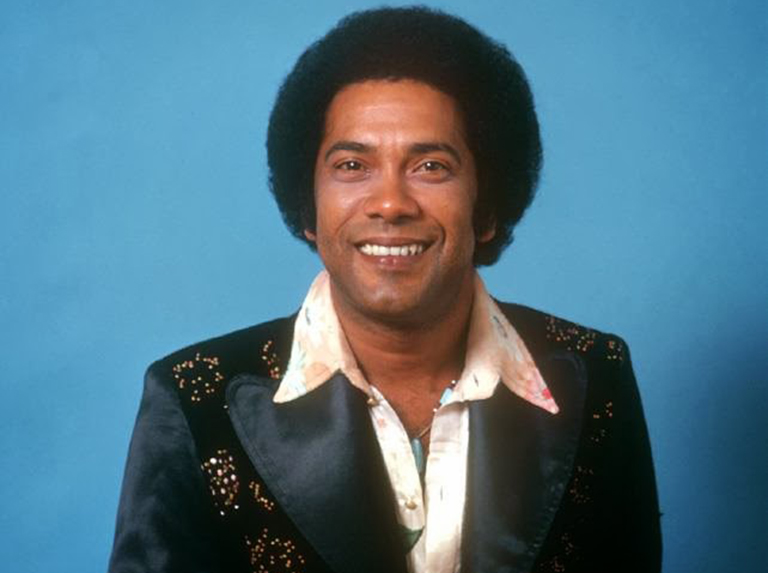
I have cried over the deaths of many artists, but none affected me, or still hurts me, as much as Cheo Feliciano’s. Whenever I hear one of his songs, I return to that holiday morning when I was driving and pulled over to mourn him. I had heard the news among a rush of inconsequential stories pouring out of the radio station I had tuned in to.
The announcer improvised a hurried tribute. He seemed eager to move on to the next item on his schedule, one that probably meant nothing to my life. Uneasy, he spoke of Cheo as just another dead man while trying to sound moved. Perhaps he did not know who Cheo was. At times his colleague had to explain that this was not the blind guitarist also named José Feliciano. No, not that one: this was a salsa singer known for a song called El ratón, and, he thought, a member of the Fania.
I could hardly believe that Cheo had died. Only days earlier I had seen a Facebook video of him dancing onstage alongside Oscar D’León and other artists. I thought then that he was winning his battle with cancer. He looked alive, energetic and, above all, lucid.
Crying for an artist may sound excessive, even ridiculous to some, but Cheo was different for me. By 2014 I was old enough to understand that we all die one day, and that death is the one certainty we share. Still, the weight of his songs fell on me that morning. I searched for another station that might give me a fuller account of the news, and as I listened to his music I understood that I was saying goodbye to a piece of my childhood.
To hear him that morning was to return home: to smell the morning coffee and remember my mother turning over one of his records, part of our household routine and the ritual that began each day. The length of his songs had even become a kind of clock in my head. With Cheo, his 1971 album, the timing was exact: when Si por mí llueve came on, I had to be leaving for school. How curious. That morning, as in the song, it rained.
The tragic news joined the losses of April 17, 2014, a day that filled newsrooms with interviews, memories and obituaries. Cheo was not the only one who left us. Like the character in his song Juan Albañil, he rose early, though this time to depart at 4:30 a.m. Later, at around 3 p.m., another downpour shook us: the media confirmed the death of our Nobel laureate Gabriel García Márquez, a giant of world literature and the creator of Macondo, an imagined village built from his grandparents’ stories and the wandering storytellers he heard as a child. What a sad day for the Caribbean, literature, music and life. Two pillars of love, letters and art seemed to meet in the sky as a final expression of their time in this world.
That night, the same newscast I had heard in the morning paid tribute to politician and former transport minister Andrés Uriel Gallego, remembered for the La Línea tunnel through Colombia’s Central Andes. His death, too, had occurred that day. I cannot say whether Gallego shook hands with Cheo and Gabo up there; I am afraid I owe you that answer.
Holy Thursday carries great symbolic weight in Catholicism. It recalls the Eucharist at the Last Supper, the washing of feet and the prayer in the Garden of Gethsemane. The Bible tells us that Jesus chose that meal to bid farewell to his apostles. But for culture, that April 17 was different. We were given no farewell supper; instead, we were startled by the death of a man who had always sung openly about dying. He never washed my feet, at least. On the contrary, he left them swollen from dancing to his music.
Speaking of miracles and gifts, Cheo had an extraordinary one: he could make us dance to Anacaona or Naborí and break our hearts with boleros such as Amada mía or Mi triste problema. Moving so freely between those two worlds calls for sometimes opposite abilities. On one side is dance music, overflowing with rhythm and carried by the magic of the clave. On the other is romance, where emotion lies close to the surface, whispers in the ear and recites its songs in the language of love.
Curiously, García Márquez knew that second world well. He repeatedly declared his love of the bolero and once described Love in the Time of Cholera as one. Gabo admired the Cuban bolero singer Bienvenido Granda, a leading member of the Sonora Matancera known as “the singing moustache.” Some friends therefore joked that Gabo was “the writing moustache.” When singer Tania Libertad announced an album in García Márquez’s honour, she recalled two of his favourite boleros: Usted and Nube viajera.
But let us not lose ourselves in boleros. Ten years after Cheo’s departure, the right way back to him is through his records. Many of his best-known songs were written by fellow Puerto Rican Tite Curet Alonso. Cheo’s openness in singing about death helped turn Los entierros, Sobre una tumba humilde and Viaje final into farewell hymns in neighbourhoods across Latin America. Even Anacaona, one of his dance numbers, mourns an Indigenous woman who, as the song says, “dies crying, dies but does not forgive.”
Thinking of Cheo and Gabo, I know that a person is born and dies, but an artist can evade death through the work they leave behind. I would even say that an artist is born to live and to wear a kind of immortality, as Cheo does in songs that refuse to leave after all the rainy mornings of these past years. As Feliciano himself would say: “¡Sentimiento, tú!”
Postscript: I selected this playlist, which travels through Cheo Feliciano’s work, song by song so as not to leave anything out. It moves between boleros and dance recordings from his years with Joe Cuba, with the Fania and later as an independent artist. To echo this story, I deliberately placed Viaje final at the end.
Listen to the accompanying playlist on Spotify using the player beside this story.